HRM Platform
Role-Based Human Resource Management System
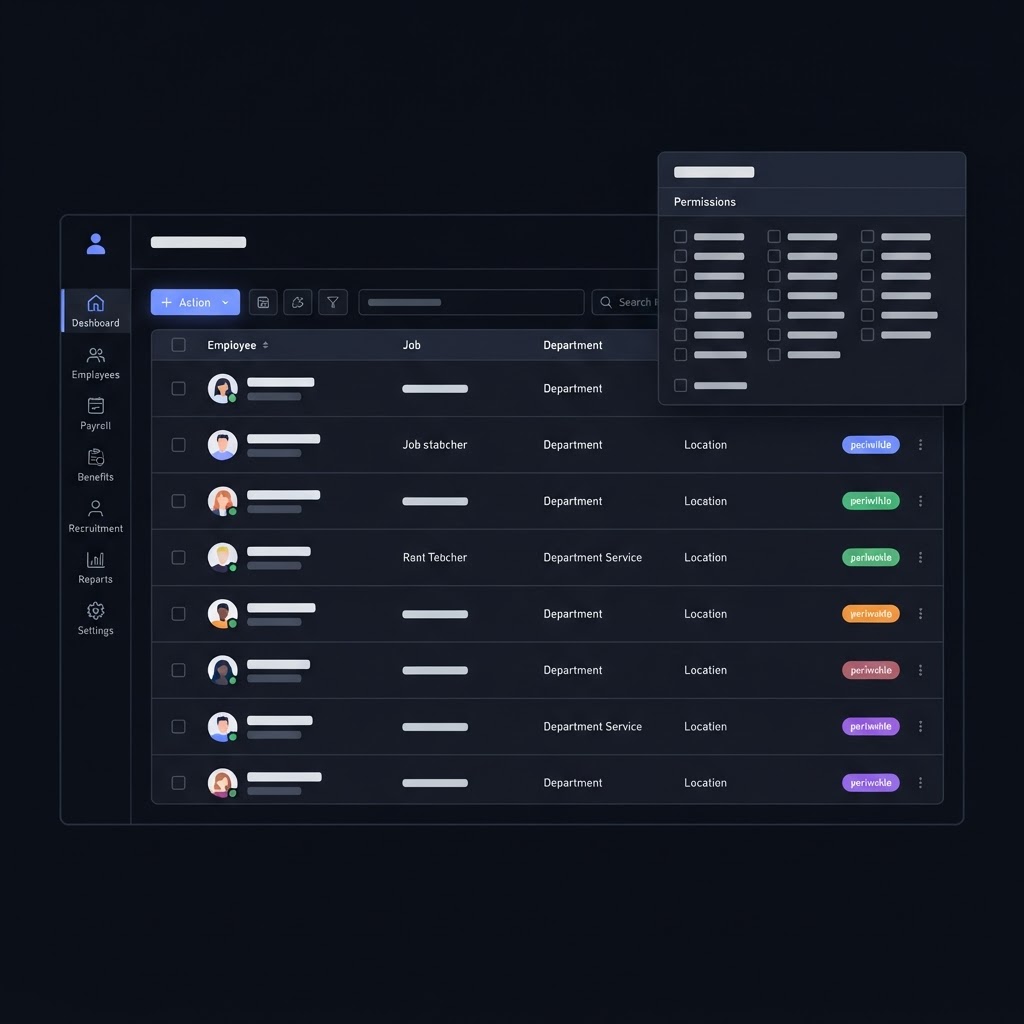
Overview
The HRM Platform is a centralized human resource management application designed to streamline employee-related operations while maintaining secure, role-based access to organizational data. The platform provides a structured environment where employees, managers, and HR administrators can access the information and tools relevant to their responsibilities.
Built with React, TypeScript, and Firebase, the application focuses on secure authentication, controlled data access, and a scalable frontend architecture. Its role-based access control (RBAC) model ensures that users interact only with the resources and functionality permitted by their assigned roles.
Problem
Managing employee information across spreadsheets and disconnected systems can lead to duplicated records, inefficient workflows, and unauthorized access to sensitive company data. Organizations need a centralized platform that simplifies HR operations while preserving data confidentiality and accountability.
Solution
I developed an HR management platform that combines authentication, role-based authorization, and structured employee data management in a single application. The system is designed around distinct user roles and team boundaries, allowing the interface and data-access layer to enforce appropriate permissions.
Key features
Authentication and Authorization
Secure user sign-in and session management using Firebase Authentication.
Role-Based Access Control
Different permissions for administrators, HR personnel, managers, and employees, depending on the configured roles.
Scoped Data Access
Employee and team information is restricted according to user permissions and organizational boundaries.
Employee Management
A centralized interface for viewing and managing employee records and related information.
Role-Aware Interface
Navigation, actions, and page access adapt to the authenticated user's permissions.
Type-Safe Development
TypeScript improves maintainability and helps catch common errors during development.
Centralized Data Management
Firebase provides the backend services needed to store and retrieve application data.
Implementation
The frontend is built with React and TypeScript, using reusable components to maintain consistency across pages and simplify future enhancements. Firebase Authentication handles identity verification, while Firebase data services can be used to persist employee information and application records.
The authorization model separates authentication from authorization: verifying a user's identity does not automatically grant access to every resource. Permissions must also be validated against the user's role and data scope. Where Firestore is used, security rules should enforce these restrictions at the database level rather than relying solely on frontend checks.
Challenges
- Designing a role and permission model that can support multiple organizational responsibilities.
- Ensuring users cannot access restricted records simply by changing a URL or manipulating frontend state.
- Keeping authentication state and permission-dependent UI behavior consistent.
- Structuring reusable components and typed data models for long-term maintainability.
Outcome
The project demonstrates practical experience in building secure, role-aware web applications, designing authentication flows, organizing frontend architecture, and applying authorization principles to business software.
Technologies
Demonstrates
Secure application design, authentication, authorization, data isolation, and scalable frontend development.

